First day cover ·
21 Practical Shoe Storage Ideas for a Tidier Home
Give everyday shoes a clear landing spot, make closets easier to use and move seasonal pairs out of the way with simple storage ideas.
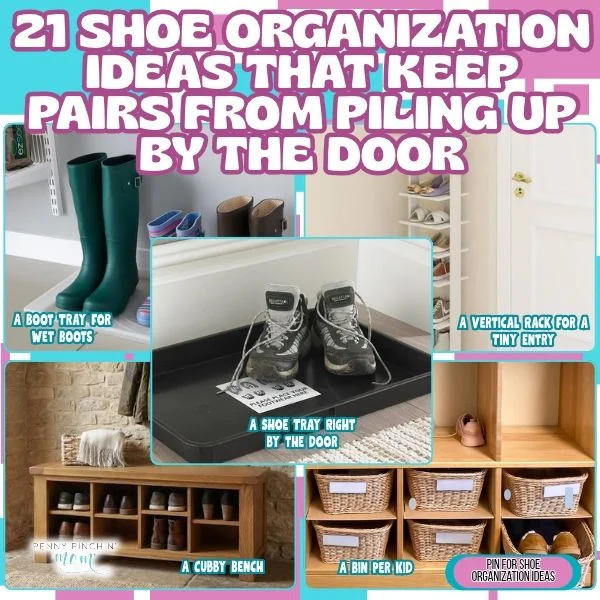
A shoe system works when putting a pair away takes less effort than leaving it on the floor. That usually means choosing one clear landing spot, keeping it close to where shoes come off and limiting how many pairs have to fit there.
Start with the shoes your household wears every day. Then add storage for wet boots, children’s pairs, dress shoes and off-season footwear where each category naturally belongs. Many of these ideas can use items you already own; the listed store prices are approximate and may vary by location.
Set up the entry for daily use
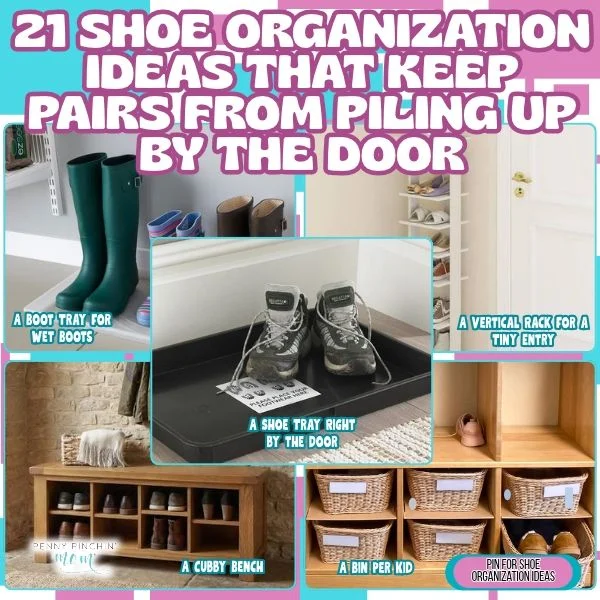
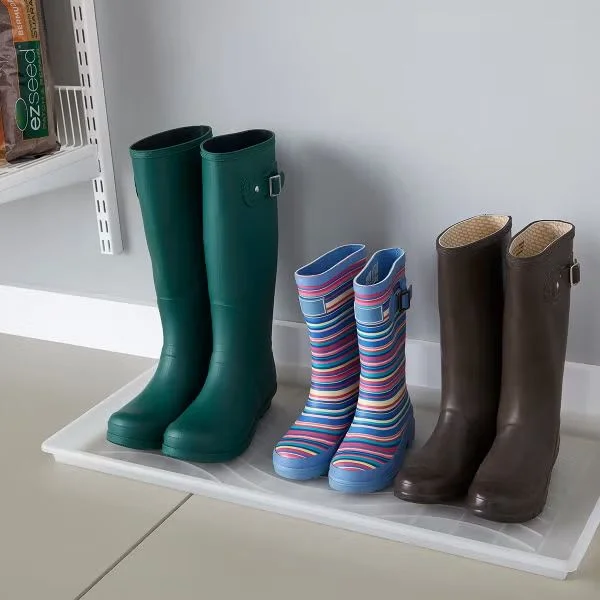
1. Catch wet boots in a raised-edge tray
Snow and rain need somewhere to drip besides the floor. Before buying anything, check for a cafeteria tray, plastic dish pan or washer drip pan that can do the job. If you need a dedicated tray, molded plastic versions at Target or Walmart cost about $15 to $30.
A tray about 2 feet long holds four to six pairs. A family of five may need two, with one near each side of the door. Look for a raised lip that keeps melted snow contained. A flat mat won’t hold pooled water as reliably.
2. Give everyday shoes one obvious landing place
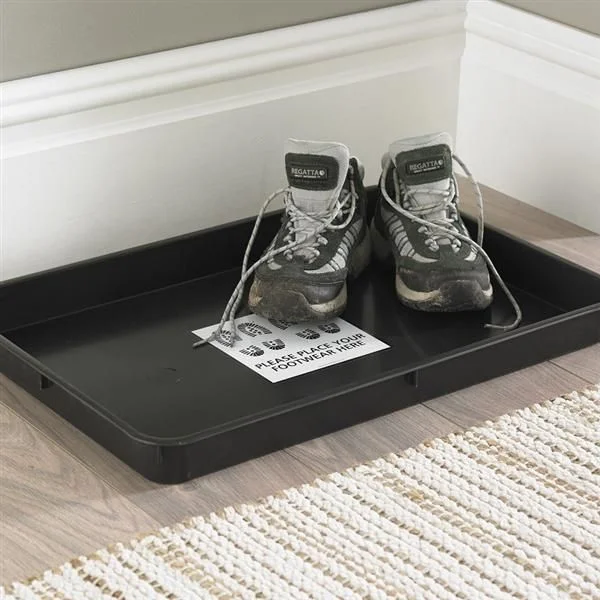
A shoe tray by the door makes the routine simple: shoes come off and land there. A baking sheet or serving tray from the cupboard can work at no cost. Dedicated low-profile trays at Target or Walmart run about $10 to $20.
Choose one that holds six to eight pairs, roughly the everyday rotation for a family. Its edges help define where shoes belong. That boundary can be easier to follow than a rack that leaves the floor around it open.
3. Use wall height in a narrow entry
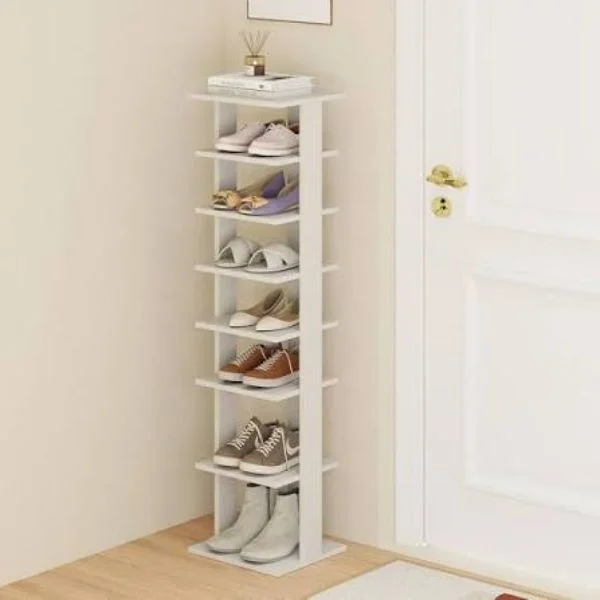
When there’s little room for furniture, a wall-mounted or over-the-door rack can move shoes off the floor. Prices at Walmart or Amazon range from about $25 to $60, depending on the number of tiers. Three tiers typically hold nine to twelve pairs.
Measure the door swing before mounting a rack. In a tight entry, a unit that blocks the door is likely to become a nuisance and fall out of use. Check the available wall space and pick a position that stays clear of the opening.
4. Pair a bench with individual storage
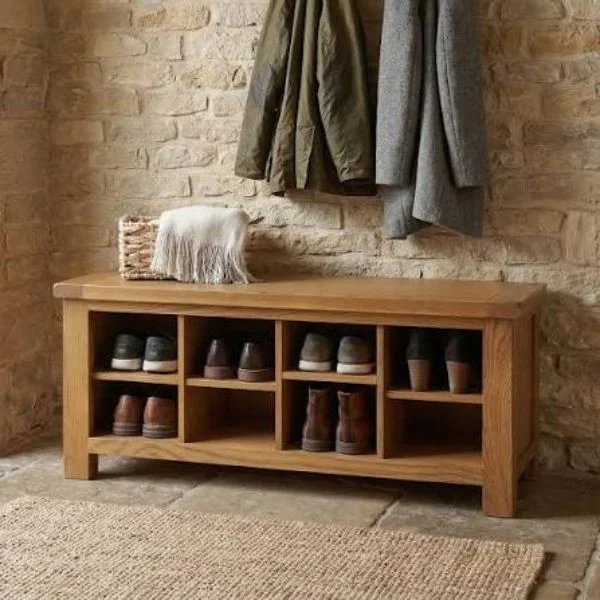
A cubby bench adds a place to sit while taking off boots and gives each household member a designated space below. Store-bought models at Target or Amazon cost about $80 to $200; four to six cubbies suit many families. Assembly can take an afternoon.
An existing bench, low shelf or sturdy toy box can serve a similar purpose. Set baskets underneath, one per person. Sitting makes the storage more likely to be used because it’s where people already remove their shoes.
5. Give each child an open bin
A named bin asks less of a child than a shared pile or a neatly arranged rack. Dollar Tree basket-sized bins cost $1.25; sturdier open-top versions at Target are about $5 to $10 each. Skip the lid, which adds another step.
Use a written name for readers and a color cue for younger children. Masking tape and a marker are enough. A personal bin can keep the entry from turning into a search through everyone’s shoes, though it still needs a sensible limit on how many pairs go in.
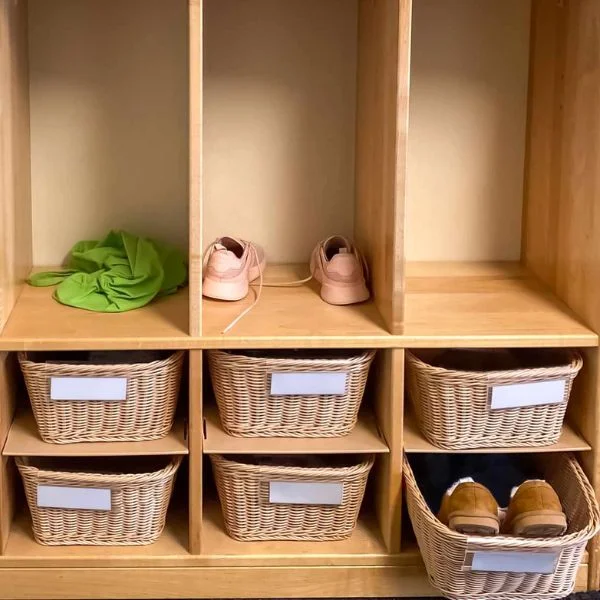
6. Keep indoor slippers by the shoe tray
In cold weather, slippers are another useful category at the door. A basket you already own costs nothing; a woven or fabric basket at Target or Walmart runs about $10 to $20. A basket roughly 14 inches wide can hold four to six pairs.
Place it beside the shoe tray so boots can come off and slippers can go on in one spot. Returning slippers to the basket on the way out makes them easy to find again.
7. Limit the number of pairs at the door
Even a well-sized tray will overflow if too many shoes are assigned to it. Set a household limit, such as two pairs per person in summer and three in winter, when boots are in use. Store the rest in bedrooms or a hall closet.
This costs nothing, but it requires a regular check. Count the pairs by the door now, then repeat at the start of each season as the mix changes. Storage works better when the number of shoes fits the space available.
Make closet storage easier to see and reach
8. Put a two-tier rack on the closet floor
A freestanding metal or plastic rack gives each pair a visible place, instead of letting shoes gather in a heap. Racks at Walmart and Amazon cost around $20 to $40 and hold roughly six to nine adult pairs. One may suit an adult closet; a shared closet might need two.
Before buying, see whether an existing short shelf or bookcase shelf fits under the hanging clothes. The simplest arrangement is usually the one that makes returning a shoe as easy as dropping it.
9. Add pockets to a closet or bedroom door
An over-the-door organizer can store flats, sneakers and sandals off the floor. Fabric models at Walmart cost about $12 to $20. Sturdier canvas or clear-pocket versions at The Container Store are around $25 to $35. One usually holds about twelve pairs, enough for one adult or two children.
Check that the hooks sit close enough to the door for it to close. Avoid stuffing the pockets: filling them only about two-thirds helps prevent sagging and swinging.
10. Box the shoes you wear occasionally
Boxes make dress shoes and other occasional pairs easier to locate, especially when several look alike. Reuse the boxes the shoes came in for free, or buy plastic shoe boxes at Dollar Tree for $1.25 each. Clear stackable versions at Target or The Container Store cost about $8 to $12.
Reserve boxes for heels, dress shoes and boots used only a few times a year. Four to eight boxes cover many closets. Keep everyday pairs on an accessible rack so you don’t have to open and close boxes several times a day.
11. Add height in a small closet
In a shallow closet, another floor bin can add bulk without making shoes easier to find. Stackable shelves or slanted racks use the vertical space between the floor and hanging clothes. Units at Walmart or Amazon cost around $15 to $30 and often hold two pairs per tier; stacking two or three can make room for six pairs.
Measure the closet depth first. If it’s under 14 inches, a slanted shelf can be a better fit because the shoes angle toward you instead of extending straight back.
12. Hang fabric shelves from the closet rod
Hanging fabric organizers provide five to ten cubbies without taking up floor space. Target’s canvas versions cost about $12 to $25 and use roughly a foot of rod space. One organizer is usually enough for a closet.
Hang it near the door end of the rod, where it’s easy to see and reach. If it disappears behind coats, the shoes inside are less likely to be put away consistently.
13. Store heels on tension rods
A tension rod can turn unused space above a wide closet shelf into storage for heeled shoes. Set the rod a few inches above the shelf, then rest each heel over it so the toe hangs down. A 24-inch rod holds about six to eight pairs.
Dollar Tree sells tension rods for about $1.50 to $5; sturdier spring-loaded versions at Walmart or Target cost around $8 to $12. This setup suits shoes with a defined heel. Put flats and sneakers on a rack below.
14. Keep tall boots upright
Boots that collapse can crease and take up more room. Rolled magazines or a pool noodle cut to the height of the boot shaft can help them stand upright, often at no cost if you already have the materials. A pool noodle at Dollar Tree costs about $1.25 in summer and can make inserts for three or four pairs.
Store-bought boot shapers at Amazon or Target run about $10 to $15 per pair. Whichever option you use, return the support to each boot after wearing it so the pair stays upright between uses.
15. Add a riser to the top shelf
A shelf riser uses the open space above items already on a closet shelf. Plastic or wire versions at Walmart or Target cost about $10 to $20 each. Two side by side on a standard closet shelf may cost $20 to $35.
Keep heavier boots on the main shelf and lighter, less frequently worn pairs on the raised level. Make sure the upper shoes remain easy enough to reach; hard-to-access storage often sends pairs back to the floor.
Use bedroom space for rotation and children’s shoes
16. Raise the bed to create clearance
Bed risers add three to five inches, which may give a storage bin enough room to slide underneath. A set of four or eight costs about $15 to $25 at Walmart or Amazon. Check the package’s weight rating before buying, especially if the bed has a heavier mattress and box spring.
Measure the clearance you need and the bin you plan to use. The goal is a container you can pull out without lifting a mattress corner.
17. Choose a rolling cart for shoes in regular rotation
A low rolling cart can make under-bed storage easier to use than a container that has to be dragged out. Amazon models with a fabric or plastic frame cost about $25 to $40 and commonly hold eight to twelve pairs in two rows.
Check whether the cart has wheels or plastic gliders. Gliders may stick on carpet, while wheels can roll out with a nudge. Use this space for pairs in current rotation; dress shoes worn only a few times a year belong in a box.
18. Put children’s bins within easy reach
Place an open bin on the closet floor or on a shelf no higher than a child’s shoulder. Dollar Tree bins cost $1.25 each, while small open bins at Target are about $5 to $10. A household may want separate bins for everyday sneakers, dress shoes and outdoor footwear.
Keeping the bins open and low makes it easier for children to put shoes away without help. If a child can’t reach the storage spot, the system is less likely to work.
19. Use picture labels for children who can’t read yet
A photo of the shoes on the front of a bin can help a toddler match pairs to their place. Print a phone photo at home, or draw a simple shoe on masking tape. Both options cost nothing; a label maker around $20 at Target isn’t necessary.
Cover the paper with clear packing tape to protect it from scuffs and peeling. Replace a worn label if it becomes difficult to recognize.
20. Set out tomorrow’s pair in the bedroom
A basket at the foot of the bed gives the next day’s shoes a place away from the entry. A laundry basket or plastic dish pan you already own costs nothing. A woven bin at Target runs about $12 to $20. Keep it to one pair per bedroom.
When tomorrow’s shoes go into the basket, return today’s pair to its usual home in the closet or under-bed storage. That small exchange keeps the basket from becoming another general pile.
Move shoes out of season
21. Store off-season pairs in clear bins
Snow boots in summer and sandals in winter take up space needed by the shoes currently in use. Clear stackable bins at Walmart or Target cost about $8 to $15 each, depending on size. Many households can start with two to four: one per person in a larger family or one shared bin per season in a smaller household.
Clear sides make it possible to spot what’s inside without removing the lid. Put the bins on a closet or garage shelf, then swap them when the weather changes. A garage shelf can hold the full set if the entry closet is short on space.
Start with the spot shoes already use
Choose the storage that matches the problem: a raised-edge tray for wet boots, a rack for a narrow entry or open bins children can reach. Then set a limit on the number of pairs that belong near the door and move the rest to their regular homes.
One useful landing spot is enough to begin. Let it handle the daily rotation before adding storage for other categories.