First day cover ·
NCR Asks Registrants and Consumers to Use Standard Channels First
The National Credit Regulator wants people to use its normal contact and escalation routes before going to senior management. Here's why that matters and what to check first.
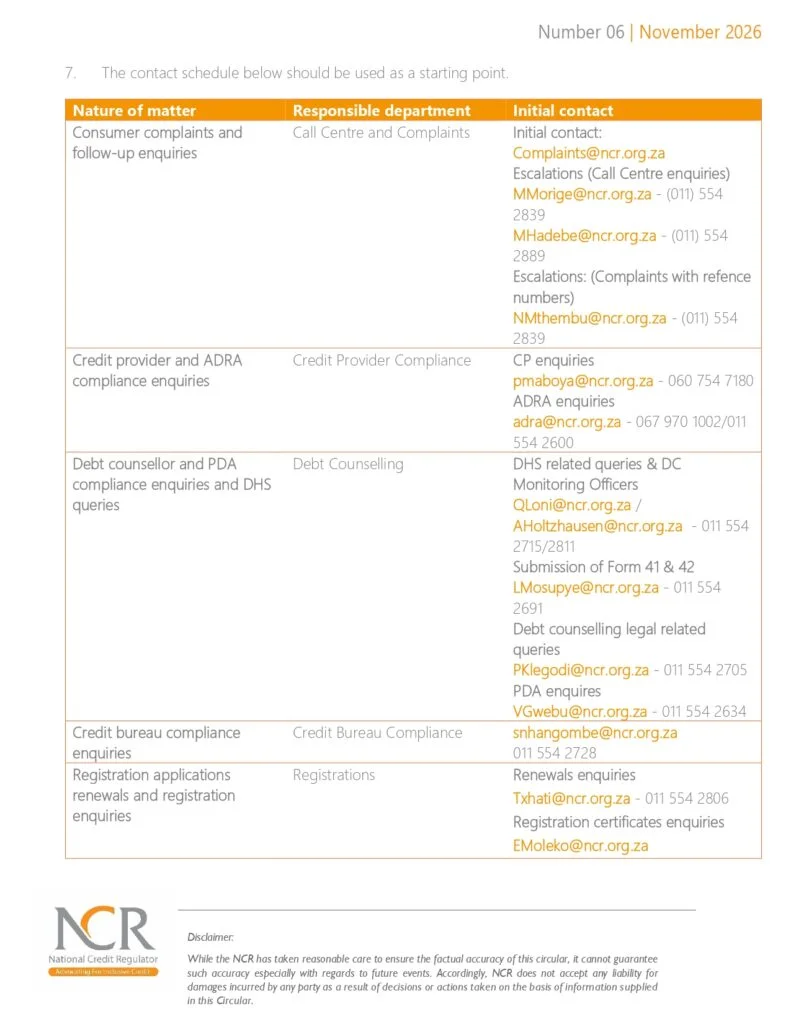
If you've ever sent an email to the National Credit Regulator (NCR) and watched it sit unanswered, you're not alone. The regulator is now asking registrants and consumers to slow down and stick to its standard contact and escalation processes, and to give those processes time to work before they go higher. My read is that this is less about blaming frustrated people and more about clearing a queue that has grown longer than anyone wants.

Why the request matters
The NCR has built a reputation for slower turnaround times over the years. That's understandable given how much it has on its plate, but it's still a sore point for people who approach it for help. The concerns range from registering as a new Debt Counsellor to lodging a complaint as a consumer. Anyone who has waited weeks for a reply knows how wearing that can be.
Expectations have shifted, too. People now expect quick answers, and an email that looks unread can feel like being ignored. That's where the trouble starts. When a message seems stuck, the instinct is to chase it, and that instinct is exactly what adds to the backlog.
How the workaround becomes the problem
Some people in the industry have figured out which staff members tend to reply fastest, then send their requests straight to those individuals. It feels efficient in the moment. But it bypasses the routes the organisation has set up to sort and track each matter, so the request can land in the wrong place or be handled outside the system meant to manage it.
Others escalate in a different way. They send repeat messages, copy in more and more people, and eventually include senior management, going as far as copying in the new NCR CEO. The NCR's own framing captures the cycle neatly: a backlog in responses feeds on itself, creating more congestion, and repeated messages add to the pile. Each extra copy means more people reading the same thing, more replies to coordinate, and a clearer queue for nobody.
Here's the thing: none of this is a dramatic misstep. Most people doing it are simply worn out. But the practical effect is that the matter you care about can end up moving more slowly, not faster.
Who the circular covers
The appeal is aimed at everyone registered with the NCR as well as consumers. That includes Debt Counsellors, credit bureaus, credit providers, alternative dispute resolution agents and PDAs. If you sit in one of those groups, the expectation is that you follow the same normal contact and escalation steps as a member of the public. Nobody gets a shortcut to the top.
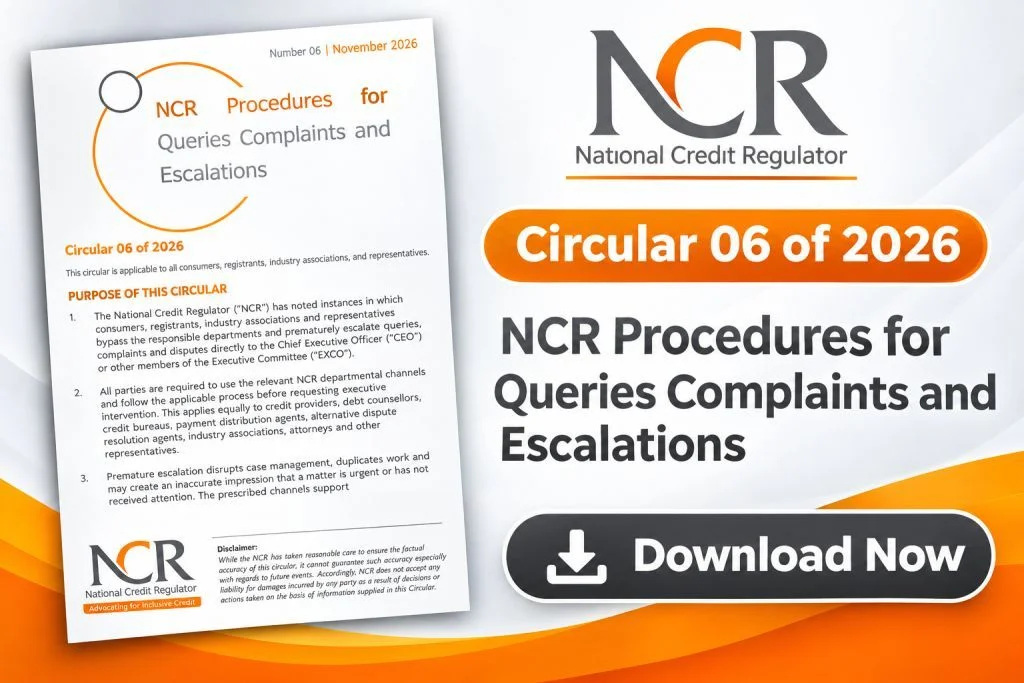
The circular is shared as Circular 06 of 2026, and the full document is linked at the end of this piece.
What the turnaround times do and don't tell you
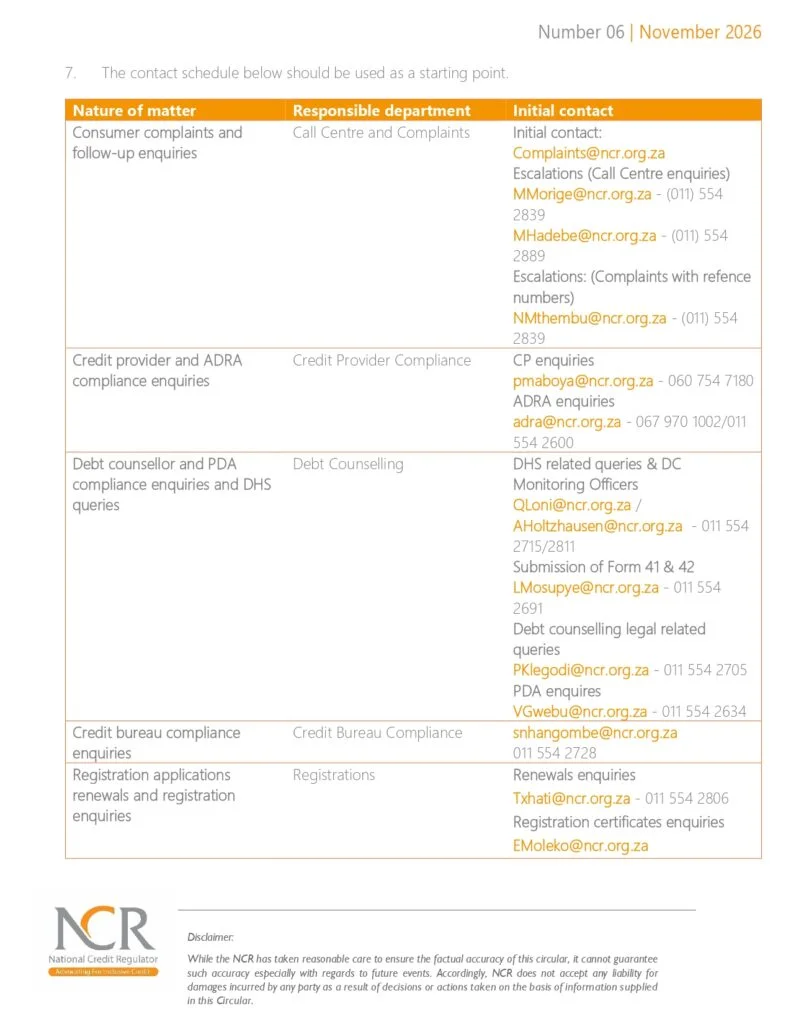
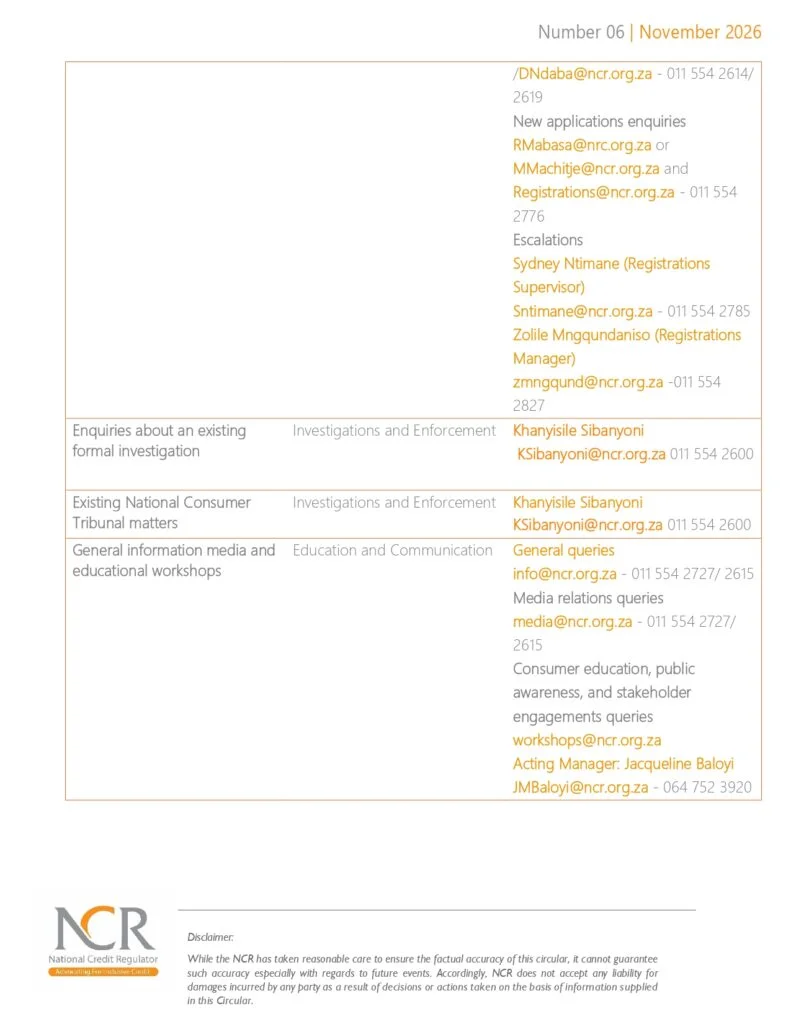
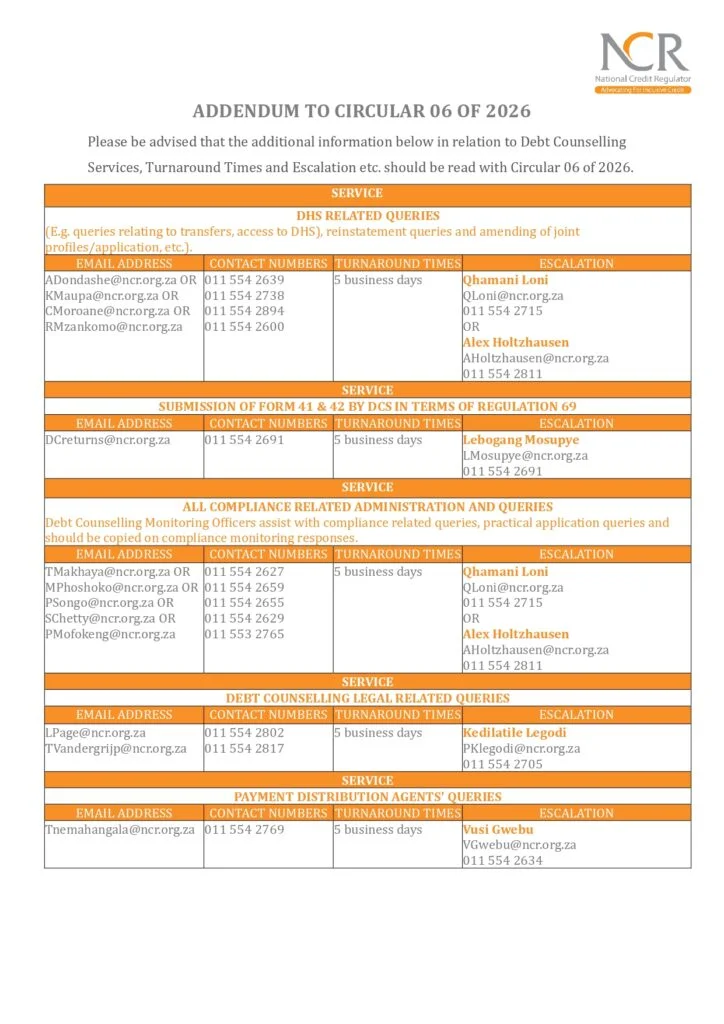
The circular sets out turnaround times for several departments, and that information is useful when you're deciding how long to wait before escalating. One gap stands out: no turnaround time is given for complaints. That means you can't measure a complaint against a published timeline the way you can with some other matters. Treat that as a reason to keep your own records rather than assume a delay is abnormal.
Before you escalate anything, check the relevant department's turnaround time in the circular, measure your wait from the date you sent the request, and only then consider the next step. If you're using a reference number or a case number, put it in every message so the team can match your follow-up to the original request. Keep copies of everything you send, including dates and times.
A practical sequence to follow
A simple approach looks like this:
First, identify the correct department and the contact channel listed for your matter in Circular 06 of 2026. Second, send your request through that channel and note the date. Third, wait at least the turnaround time shown for that department before following up. Fourth, when you follow up, keep it short, reference the original request, and restate what you need. Fifth, if you're still stuck, use the escalation process set out in the circular before you contact senior management.
This approach suits most routine queries, such as registration questions or follow-ups on an open matter. It's less useful if your matter has a deadline attached that the circular doesn't cover, because you may need to act sooner. In that case, the circular is still the starting point, but you'd want to plan your time around that deadline rather than the standard waiting period.
What to watch next
The NCR has said it's working through process changes under its new CEO, and the hope is that turnaround times will improve as those changes take hold. I'd watch for whether the published timeframes get updated and whether complaints eventually get a turnaround figure of their own. Until then, the most useful thing you can do is follow the channels that exist, give them a fair chance, and save your escalations for when they're truly needed.
Read the full circular here: NCR Circular 6 of 2026 Contacts and Turn Around Times