First day cover ·
Why Volunteering Can Build the Empathy Your Team Needs at Work
Empathy, patience and careful listening often take root outside the office. Here's how hands-on volunteering can carry those skills back to the members and customers your team serves.
After more than 35 years managing people and culture, I've come to think the qualities that make someone good at serving members rarely start at a desk. Empathy, patience and the habit of listening before reacting tend to develop somewhere else first. They show up at work later, usually when nobody planned for them to.
For a credit union, that matters more than most people realize. Members need to trust that the person across the desk or on the phone actually understands their situation. That's hard to teach in a training room. It's far easier to build in the middle of a real situation, with a real person, where there's no script to fall back on.
What a workshop can't recreate
There's a real difference between describing empathy and experiencing it. A training module can explain active listening. It can't put someone in front of a stranger whose life looks nothing like their own and force them to work out, in real time, what that person needs. Hands-on community service does exactly that, and that's why I've stopped treating it as a nice extra.
I've watched employees come back from a volunteer project and engage differently almost right away. They ask more questions before jumping to a fix. They notice hesitation or frustration faster. They listen more than they did a week earlier. Here's the thing, though: I can't tie any of that to a single engagement score. What I can see is how people carry themselves afterward. They seem energized, proud of what the group built together, and more connected to why the credit union exists in the first place.
That connection is what carries over to members. Understanding that the job goes beyond transactions, and that it's about helping people and serving the community around them, shows up in tone. It shows up in whether someone slows down when a member is confused about a loan or a late fee.
A day that stays with people
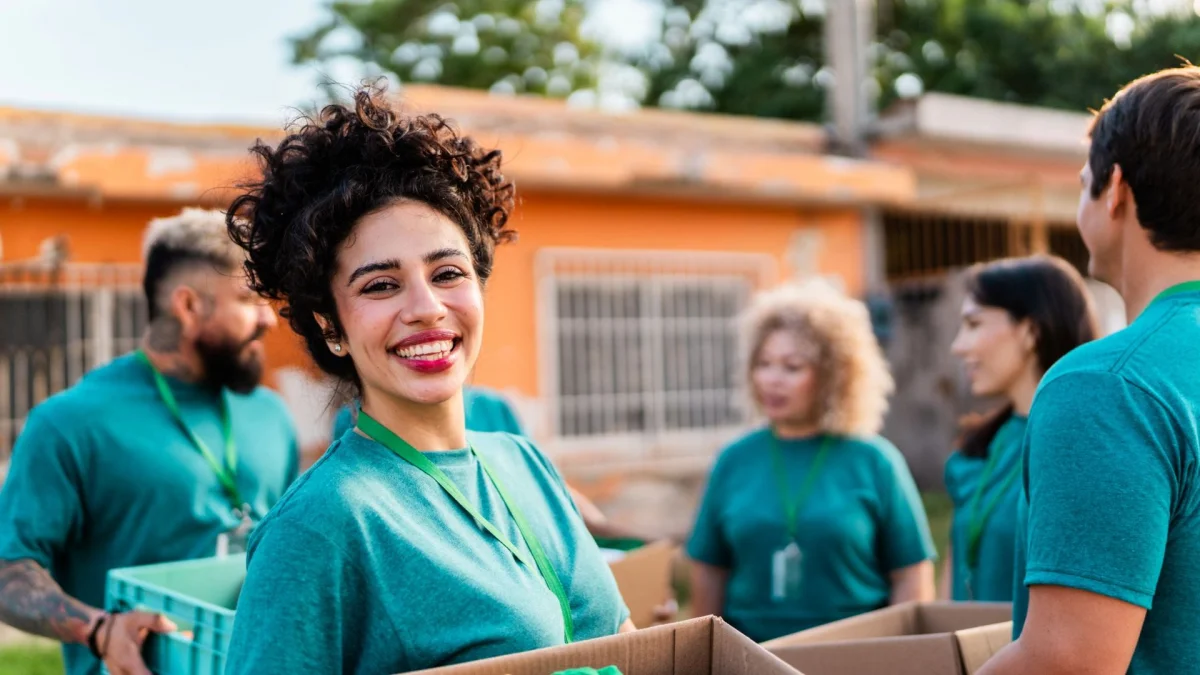
Volunteering is part of the year at our credit union, not a one-off. The biggest effort each fall is Impact Day, when we coordinate across our branches in New Jersey, New York and Connecticut. Each branch gives back to the communities it serves, so the work looks different depending on local need.
In recent years, our teams have cleaned up parks and riverbanks, served meals at soup kitchens and filled backpacks with supplies for school children who need them. What stands out to me most isn't the list of tasks. It's watching people from very different roles end up side by side, focused entirely on the needs of others. A branch manager might be hauling bags next to someone who usually works in back-office operations, and by the end of the morning, the org chart has stopped mattering.
None of that shows up in detail on a résumé. But it shapes how that employee shows up for a member the following Monday. It's a reminder delivered firsthand rather than in a memo that the credit union's role goes beyond financial products. We are part of the communities we serve, and once an employee feels that directly, they don't forget it on the drive back to the branch.
Starting small without a big program
Leaders at community banks and credit unions don't need an Impact Day to get a similar effect. You don't need a budget line or a calendar full of events. Pick one local organization or one clear community need, and give a small group of employees a few hours to work on it together. A single well-run morning can do more than a year of slide decks about customer care.
Don't skip the follow-up, either. Give people time afterward to talk about what they saw and connect it back to the organization's purpose. Ask them what surprised them, what made them uncomfortable and what they'd do differently next time. Those conversations turn a volunteer shift into something people can actually learn from, rather than a box they checked.
Let employees choose the cause where you can. Service that's assigned can feel like one more obligation on a long list. Service that people pick for themselves tends to stick, and it becomes part of how they see their work, not just something they did on a Saturday. That's a trade-off worth weighing: you give up some control over the schedule and the subject, and you get more genuine buy-in in return.
It's also worth being honest about who this approach suits. A small team with limited time may not have the capacity for a multi-branch effort, and that's fine. Some employees have caregiving duties, physical limitations or schedules that make weekend events hard. Offering a few options, including some that fit into a workday, keeps participation voluntary in the way it should be.
The skills many organizations spend heavily to build, like patience, listening and real curiosity about other people, are often developing already, somewhere outside work. The opportunity for leaders is to make room for that growth and then notice it when it comes back through the door. My read is that the payoff isn't a dramatic change overnight. It's a slow shift in how people treat the person in front of them, and that's worth paying attention to.