First day cover ·
Fruit and Vegetable Shadow Matching Printable for Preschoolers
A free 24-page printable offers fruit and vegetable matching cards, with color and black-and-white versions and several ways to play.
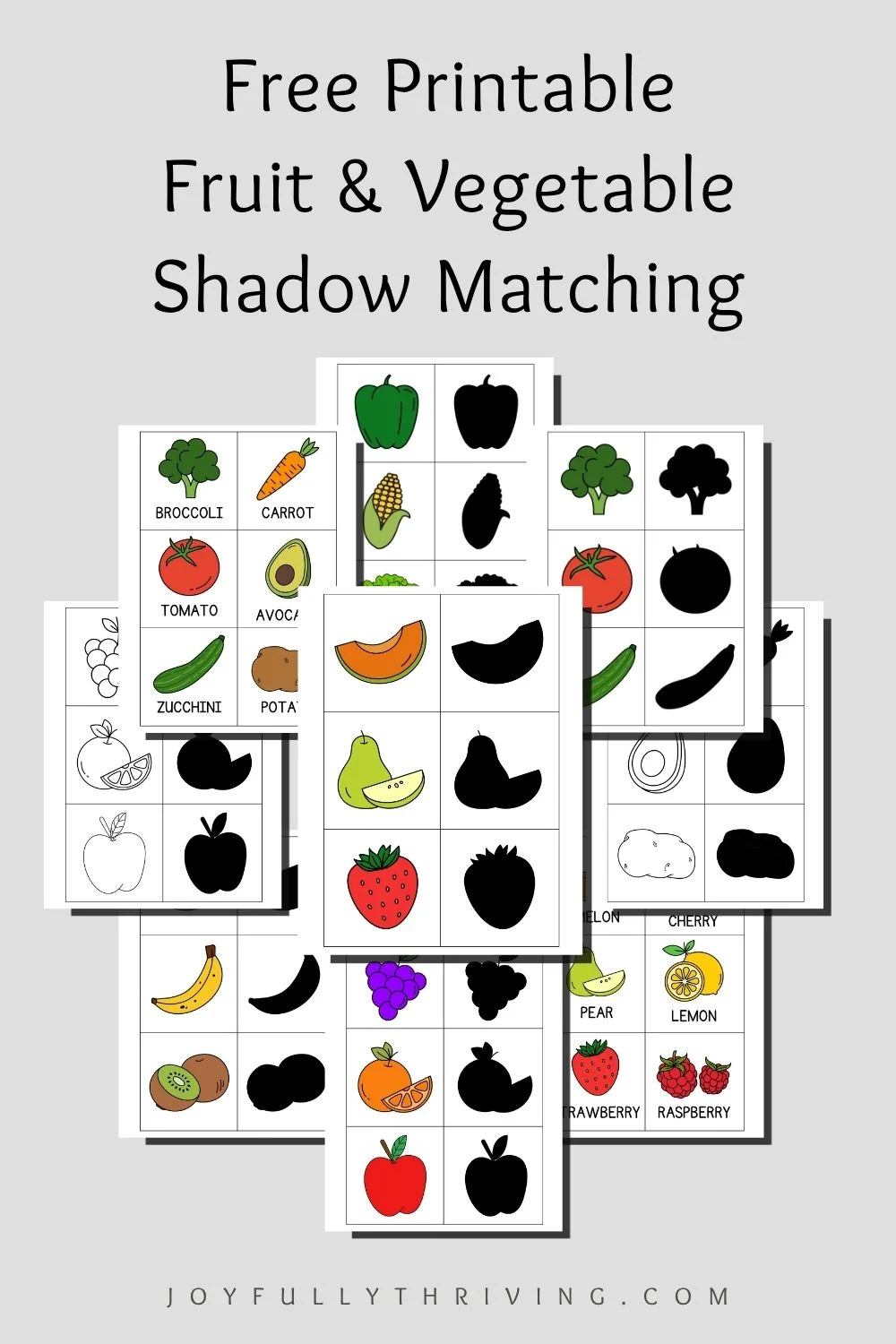
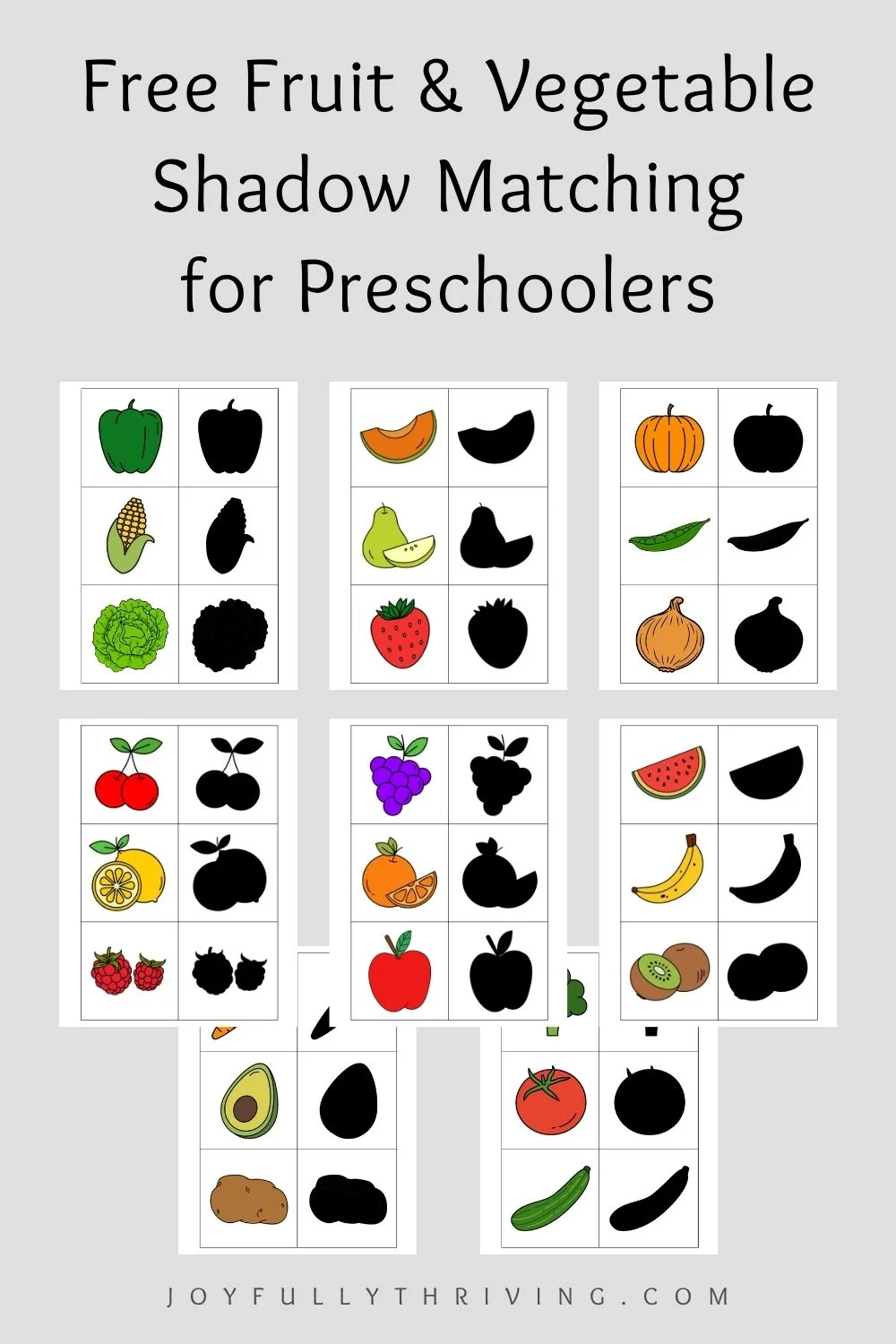
A single set of picture cards can support several preschool activities, and this fruit and vegetable printable is designed for exactly that kind of reuse. Children can match foods to their shadows, practice naming them, sort the pictures, or play simple matching and memory games. The 24-page set includes 24 pairs covering 12 fruits and 12 vegetables, with color and black-and-white versions.
That flexibility makes the cards useful for preschool classrooms, food-themed activities, garden units, farmers market play, or short learning sessions at home. You can choose a small group of cards for a first game, then bring in more as children get comfortable with the activity.
What’s in the printable
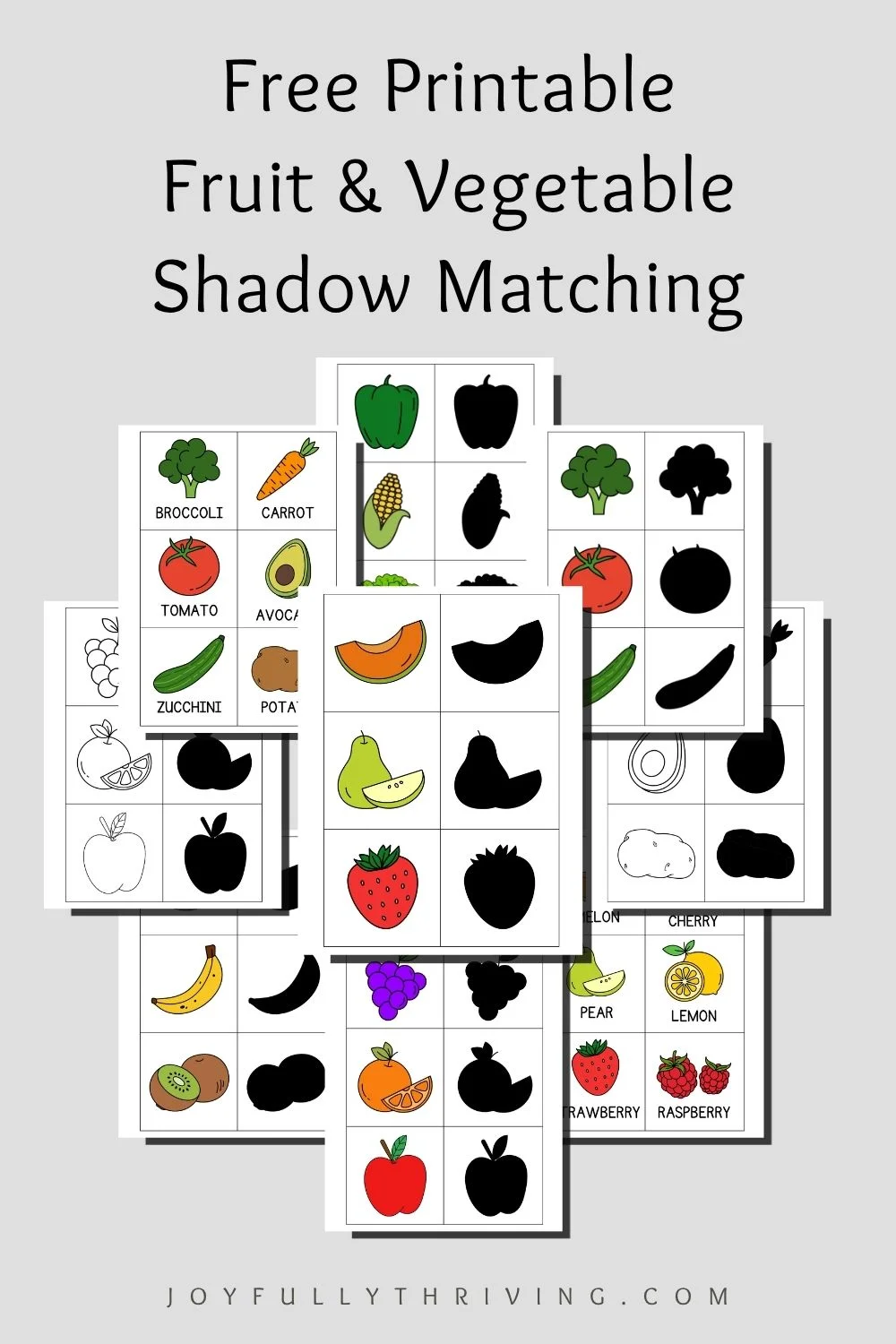
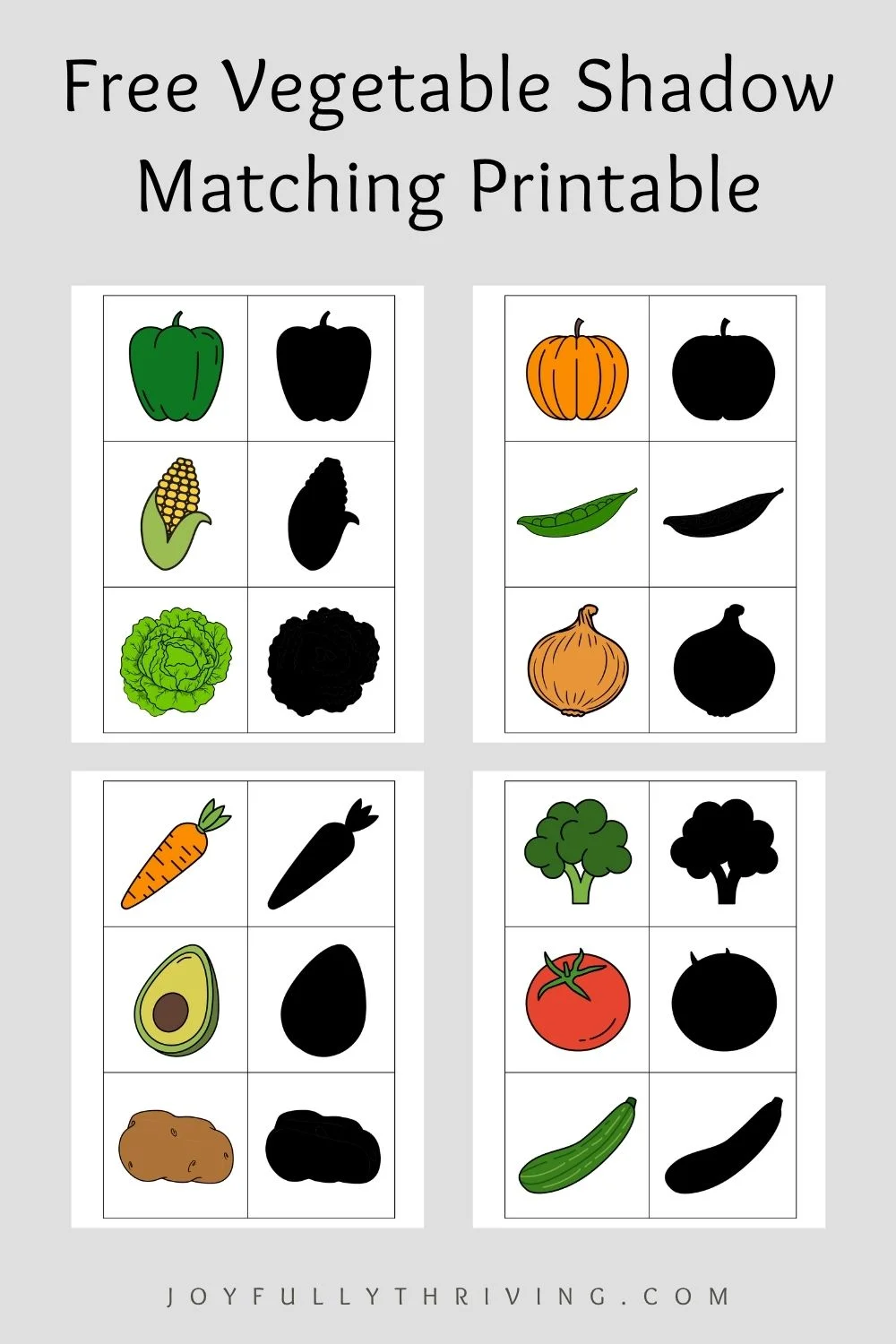
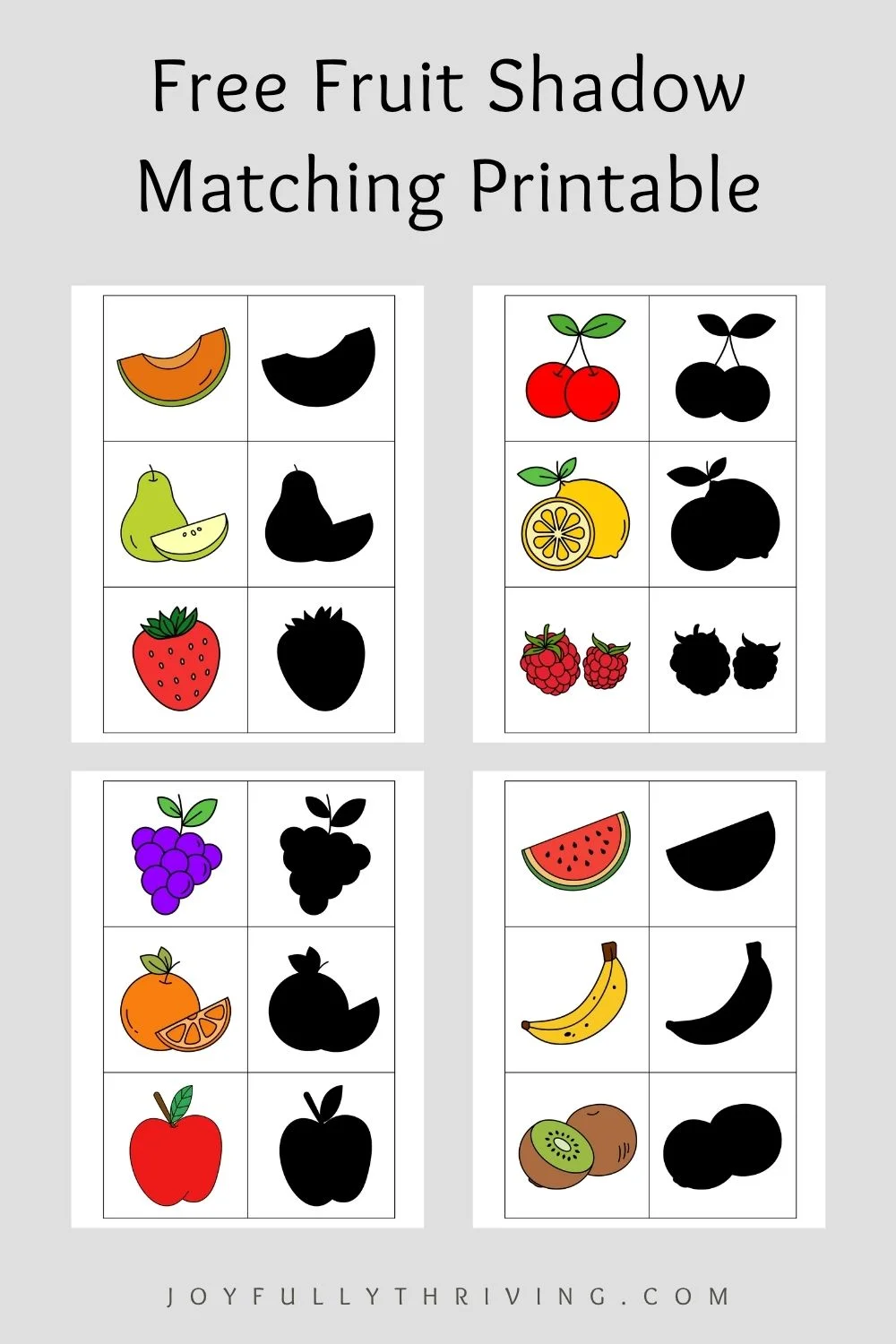
The printable pairs pictures of familiar foods with black silhouettes. Examples include apples, bananas, strawberries, carrots, broccoli, and potatoes. It also includes food picture cards with names, which can be used for naming practice or sorting.
- Fruit pictures and their matching shadows.
- Vegetable pictures and their matching shadows.
- Color and black-and-white card versions.
- Named food cards for vocabulary and sorting activities.
Cards are laid out six to a page. You don’t have to print every page: select the foods and format you want to use, and keep the rest for another session. If color printing isn’t available, the black-and-white pages offer an alternative. Children can also color the food pictures before you cut out the cards.
Prepare the cards for play
Choose the pages you need, then print them on regular paper or cardstock. Cut out each food picture and its matching shadow separately. If you plan to use the set often, laminating can help the cards stand up to repeated handling.
- Pick the pages and version you want.
- Print on paper or cardstock.
- Cut the individual pictures and shadows apart.
- Laminate the separate cards if you want added durability.
- Trim the laminated pieces, leaving a small sealed edge.
Cut the cards apart before laminating. That lets you seal each card as its own piece, which can help protect the edges during use. Cardstock and lamination may suit classroom sets that will be handled regularly; for home use, regular paper may be enough. Store the cards together in a small bag or container between activities.
Start with a few shadow pairs
Put a few shadow cards on the table and give the child the corresponding food pictures. Ask them to find which picture belongs with each silhouette. Four to six pairs can make a manageable starting set; add more when the child is ready for a greater challenge.
The game asks children to study outlines rather than rely on color. They might compare a banana’s long curve, look for the leaves on a strawberry, or check the shape of a carrot. Talking through those details gives children a chance to explain what they notice while they search.
You can keep the first round focused on fruit or vegetables, then combine the two groups for more options. As children match the cards, invite them to name each food. Ask whether they have tried it or which one they enjoy. These easy prompts bring vocabulary into the activity without turning play into a quiz.
Use the cards in other ways
The same pictures can support different games, so you can change the activity without preparing a new set of materials.
Name the foods. Use the named picture cards as flash cards. Children can say which foods they recognize, while you introduce names they don’t know yet.
Sort the pictures. Group cards by color, by whether the child has tried the food, or by the fruit and vegetable categories in the printable. You can also talk about foods that are often served together. Keep the categories familiar and let children explain their choices.
Match identical pictures. Print two copies of selected food picture cards and ask children to pair the same foods. This offers a straightforward matching round before they work with the shadow outlines.
Play memory. Place a few pairs of identical picture cards face down. Players take turns turning over two cards to look for a match. Begin with only a few pairs so the rules and the task stay simple, then expand the set if the group is ready.
These versions can fit into a preschool food theme, a garden unit, or a farmers market pretend-play area. At home, the cards can also be brought out for a short activity when there’s time for a little practice with observation, matching, or food names.
For other printable preschool activities, see the crayon letter matching game, apple letter matching game, and popsicle matching game.
Get the printable
Download the free fruit and vegetable shadow matching printable here. Choose the pages you want, print them, and cut out the cards to prepare a game.
For a first session, a handful of pairs is plenty. Once children understand how to compare the pictures with their shadows, bring in additional cards or try one of the sorting and memory activities. The set is built to work in more than one way, so you can adjust the play to the time and attention available.
Browse all the free printables on the blog here.
Disclosure
This post may contain affiliate links. As an Amazon Associate, the publisher earns from qualifying purchases. Read the disclosure policy for more information.
The post Free Fruit and Vegetable Shadow Matching Printable appeared first on Joyfully Thriving.