First day cover ·
Where the Biggest AI Data Centers Are Taking Shape
AI data center capacity is concentrating in a handful of huge projects. Their rankings depend on ambitious buildouts and continued demand for computing power.
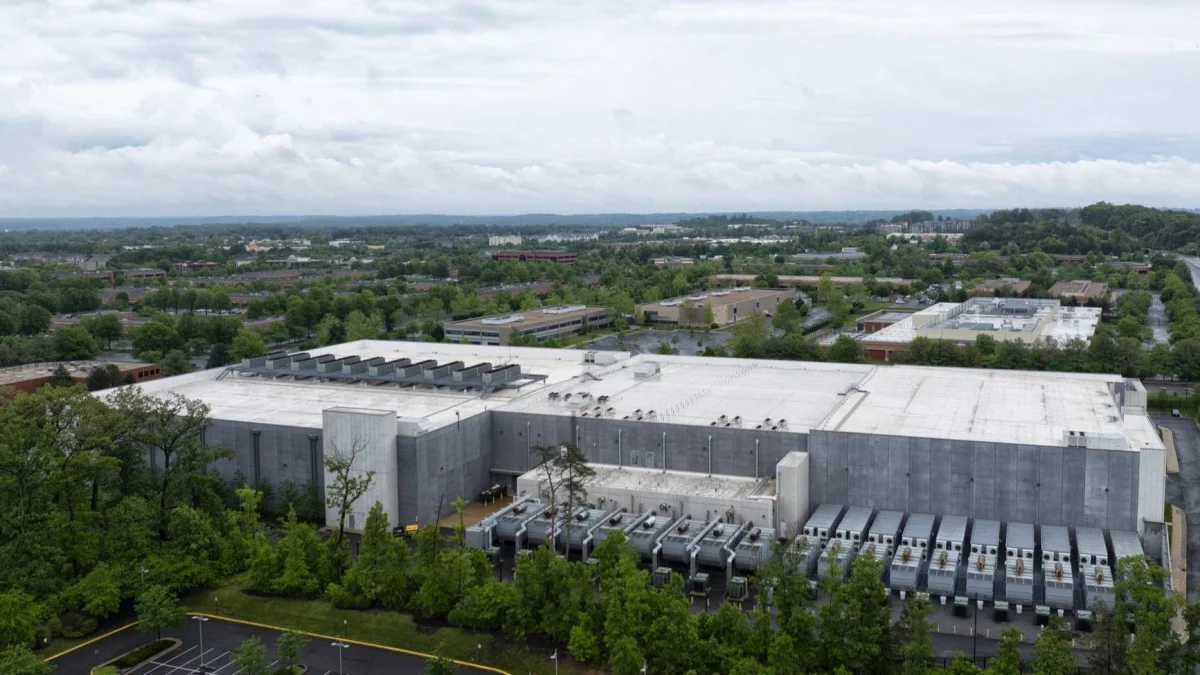
The scale of planned AI data centers is changing quickly. Epoch AI’s estimates put SpaceX’s Colossus 2 in Tennessee at the top of today’s largest facilities, while projects planned for 2030 could be several times larger. Those rankings are useful for tracking the buildout, but they depend on forecasts of capacity and on demand for AI computing continuing to grow.
A project’s size can also bring local costs into sharper focus. The proposed Stratos data center in Box Elder County, Utah, has faced strong opposition and litigation that have slowed its start. If fully built to 9 gigawatts of power, the facility would use more electricity than the entire state and release enough heat to raise nearby temperatures by a few degrees, the source reports. Its backers say the initial phase would use 1.5 gigawatts and have responded to criticism they consider unfair or inaccurate.
Today’s largest facilities
Epoch AI tracks construction using satellite imagery, permits and public documents. To compare projects, it translates estimated computing capacity into H100-equivalents, or H100e: an estimate based on the capacity of Nvidia H100 graphics processing units. That gives readers a common yardstick, though it does not mean every listed site uses that exact number of chips.
| Project | Estimated capacity | Location |
|---|---|---|
| SpaceX Colossus 2 | 1.1 million H100e | Memphis, Tennessee |
| Anthropic-Amazon New Carlisle | 818,000 H100e | New Carlisle, Indiana |
| Microsoft Fairwater Atlanta | 769,000 H100e | Fayetteville, Georgia |
| Google Pryor (North) | 637,000 H100e | Pryor, Oklahoma |
| DayOne Nusajaya | 584,000 H100e | Johor Bahru, Johor, Malaysia |
Source: Epoch AI; capacity is measured in H100-equivalents.
The list shows how much of the current top tier is located in the United States, while DayOne Nusajaya in Malaysia is a prominent project outside it. Capacity estimates make it easier to compare sites across companies and locations, but they describe computing scale rather than the total cost, energy use or construction status of a facility.
The projected leaders in 2030
OpenAI’s Stargate plans are forecast to take the top two positions in 2030. Stargate New Mexico, in Santa Teresa, is estimated at 5.1 million H100e; Stargate Shackelford, in Abilene, Texas, is estimated at 4.6 million. Each is expected to cost about $60 billion and use more than 1 gigawatt of power for millions of AI chips. The broader Stargate effort is described as a $500 billion project backed financially by SoftBank and Oracle.
| Project | Estimated capacity | Location |
|---|---|---|
| OpenAI Stargate New Mexico | 5.1 million H100e | Santa Teresa, New Mexico |
| OpenAI Stargate Shackelford | 4.6 million H100e | Abilene, Texas |
| Microsoft Fairwater Wisconsin | 4.5 million H100e | Mount Pleasant, Wisconsin |
| Meta Hyperion | 4.1 million H100e | Holly Ridge, Louisiana |
| QTS Cedar Rapids | 3.7 million H100e | Cedar Rapids, Iowa |
Source: Epoch AI; capacity is measured in H100-equivalents.
Each projected leader would exceed today’s top-ranked Colossus 2 by a wide margin. Microsoft Fairwater in Wisconsin, Meta Hyperion in Louisiana and QTS Cedar Rapids in Iowa also appear among the five largest planned sites. These figures describe expected computing capacity, not a guarantee that construction will finish on schedule or reach the projected scale.
SpaceX could also shift the rankings. The company has more AI data center plans for 2027 and beyond, and the source says those projects could move it higher in the 2030 standings. The timing and final capacity of future sites remain uncertain.
Where construction is clustering
Virginia currently has the most data centers, with Texas in second place. Texas is expected to pass Virginia in coming years because it has more projects in the pipeline. Ohio, Arizona, Iowa and Nevada are also seeing substantial planned construction.
The map of planned capacity matters because a data center’s computing estimate is only one part of its local footprint. The Utah proposal illustrates how electricity needs and heat can become central to discussions about a site’s effects. For anyone following the sector, the useful signals are whether projects progress, how their projected capacity changes and whether demand continues to support the vast buildout. Epoch AI’s project rankings offer a snapshot of that race, while the forecast’s biggest caveat remains the possibility that AI computing demand may not keep climbing as assumed.