First day cover ·
Clearing the Playroom After the Holiday Haul, One Pile at a Time
Start by pulling out what's broken, outgrown or never played with, then rehome, return or rotate the rest. Most steps cost nothing.
It's December 26th, the playroom holds twice as many toys as it did a week ago, and there's nowhere left to put any of them. I've been there. One year I spent an hour hunting for shelf space for a toy kitchen and carried the same stack of board games from one corner to another three times. The kitchen never fit anywhere. Organizing feels pointless when you're just looking for new homes for things that probably shouldn't have come into the house in the first place.
Here's the thing that makes the whole cleanout work: the order matters. Decide what leaves the house first, and the storage problem gets smaller. Once you're only storing what your kids still play with, the system you build actually holds up through January and beyond. Almost every step below costs $0, because it runs on bags, boxes and bins you already own.
Clear the Floor Before You Sort Anything
Start with the packaging, because half of what's underfoot on December 26th isn't a toy at all. Boxes, plastic clamshells, twist ties, cardboard inserts, instruction sheets and gift bags somebody saved for reasons nobody remembers all pile up fast. Use one trash bag and one recycling bag, both already in the house, so this step is free.
Pull out warranty cards and any small assembly parts first, then tape them inside the lid of the matching toy. Doing this before the sorting makes the room look half fixed right away, which matters when you're staring at a job that feels too big to start. It also keeps you from boxing up trash and hauling it to the basement.
Remove the Obvious Losers
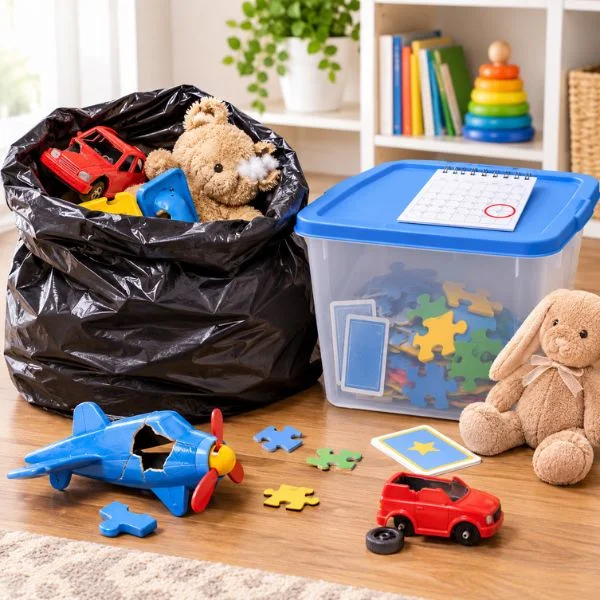
Grab a trash bag and one empty bin you already have. Anything cracked, or missing the piece that makes it work, goes straight into the bag.
The maybes need a different approach. A puzzle short one piece or a game missing two cards can go into a second bin that serves as a parts bin. Write a date one week out on the lid. If the missing piece hasn't turned up by then, the toy goes too.
Broken toys get picked up and set down a dozen times a day. Your kids are making the same decision over and over without ever finishing it. Pull those out and the floor stays clearer for the whole week that follows.
Trim the Tiny Plastic Pile
Those little plastic things accumulate in a way no parent ever agreed to. Kids' meal toys, carnival prizes, goody bag fillers, cheap party favors and the mystery pieces that live at the bottom of every bin all count. Clearing them out costs nothing.
Try this test: dump one bin on the floor and watch what your kids reach for in the first thirty seconds. The trinkets almost never make the cut. Toss anything broken, then set the rest aside as party favor filler or stocking stuffers if you want to reuse them. Once they're gone, the toys that are left become visible again.
Retire the Dried-Out Art Supplies
Markers that have quit, crayons worn to nubs, glue sticks that have gone solid, half-colored coloring books and paint pots with the lids left off all belong in this category. Test every marker on scrap paper and press every glue stick for give before you keep it. This takes about fifteen minutes and costs nothing.
Repeat the check every few months, because nothing derails a craft afternoon faster than a kid grabbing a marker that's already dead. Broken crayons are worth saving in a zip bag for melting into new ones later, but only if you'll actually follow through. Art supplies that work get used. The dead ones make kids decide the whole bin is a bust and walk away from it.
Let Go of What Your Kids Have Outgrown
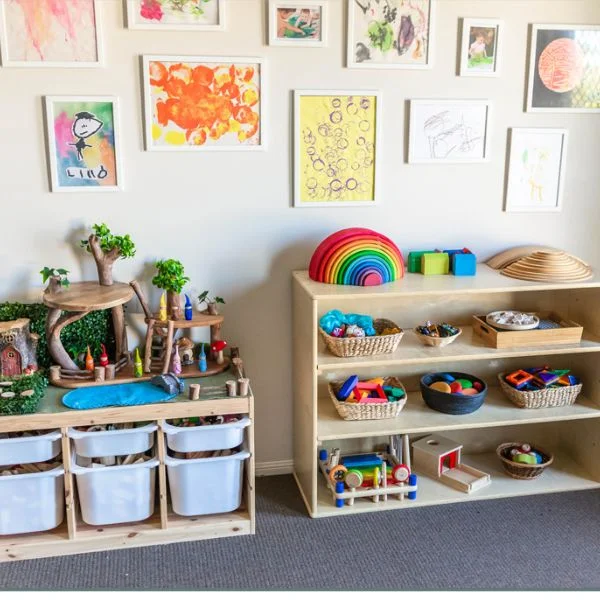
Take an honest look at what your kids actually play with now, compared with what you bought two Christmases ago. Toddler toy organization stops working the month the toddler stops being one. Shape sorters, stacking rings, pop-up busy boxes and teething toys that wandered into the playroom and never left are usually the first to go. All it costs is the willingness to admit the stage has ended.
One safety note before you go further. If a child under 3 is ever going to be in that room, whether a visiting cousin or a neighbor's toddler, anything with small parts should come out regardless of whose it is. Small pieces are a choking hazard at that age.
Outgrown toys are the ones kids step over without ever seeing them.
Let the Calendar and the Kids Make the Hard Calls
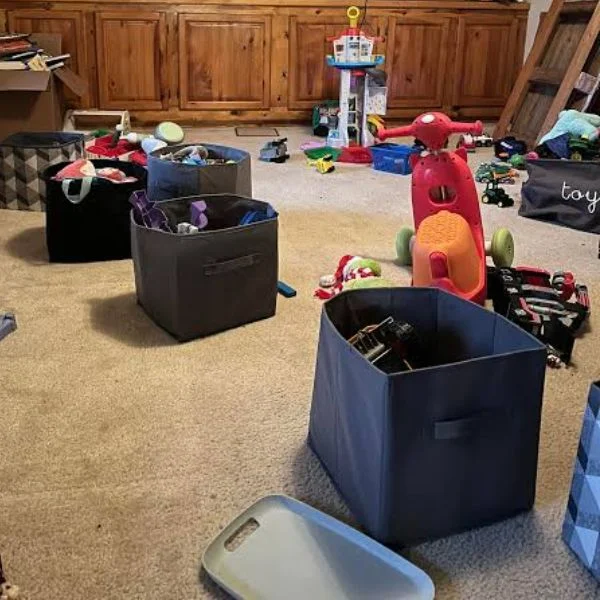
Some toys are harder to let go of than others, and that's where two simple tools come in. The first is the box-in-the-basement test. Anything nobody has reached for in weeks goes into a cardboard box you already own. Write a date one month out on the lid in marker, then tuck the box into the basement or the back of a closet. The box costs nothing, because Christmas already supplied it.
If nobody asks for a single thing from that box by the date on the lid, it's safe to let go. I once nearly dug a wooden train set back out of that box twice during the first week. I was sure somebody would miss it. The month came and went, and not one of my kids ever mentioned it. The test works because it takes the guilt out of the decision and hands the deciding over to the calendar.
The second tool is letting your kids help choose. Set up two bins labeled "keep" and "let go" with masking tape and a marker. Hand over the toys that really belong to them and let the choice be theirs, even when they hold on to something you were hoping would leave. Kids tend to defend what they chose to keep and stop defending what they chose to release. One of mine spent about twenty minutes deciding about a scuffed plastic dinosaur. He put it in the let-go bin himself, cried a little, and never brought it up again.
Move the Keepsakes Out of the Room
Some of what's in that room belongs to you. The first-birthday push toy, the stuffed bear from the hospital, the wooden puzzle somebody's grandmother made. Nobody plays with these anymore, and nobody is allowed to, so they've become furniture.
Choose a lidded box you already own, label it with each child's name, and move the true keepsakes out of the playroom entirely. Most families end up with three or four items per child. Be strict about the count, though. A keepsake box with forty things in it is just a second playroom in the closet.
Cut the Duplicates
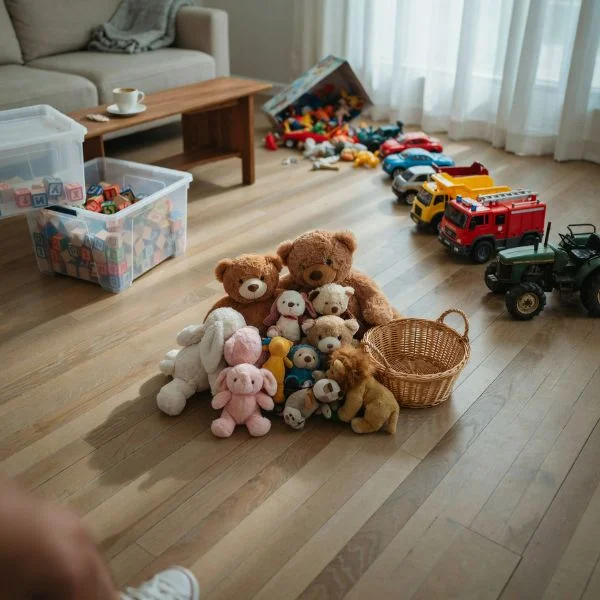
Set aside an hour, sort everything by category on the floor, and the overlap shows up on its own. Two bins of blocks. Three ride-on cars. A stuffed animal population that seems to grow every December. Sorting costs nothing and needs only floor space.
Keep the better-made version, or the one with obvious favorite status, and let the rest go. For stuffed animals, pick a container first and keep whatever fits in it. Duplicates are the fastest volume you'll ever cut, because nobody misses the second-string version.
Give One In, One Out a Head Start
Once the room has breathing room, set a household rule: every new toy that arrives, whether it's birthday money at work or a grandparent who couldn't resist, means one toy leaves first. Not later that week. First.
Let kids pick what goes, and the rule turns into a trade. The newer the arriving toy, the easier the trade usually is. Start it the same week you finish the cleanout. The pile you just spent two weekends shrinking can't quietly rebuild itself if every arrival has to earn its own spot.
Find Homes for What's Leaving
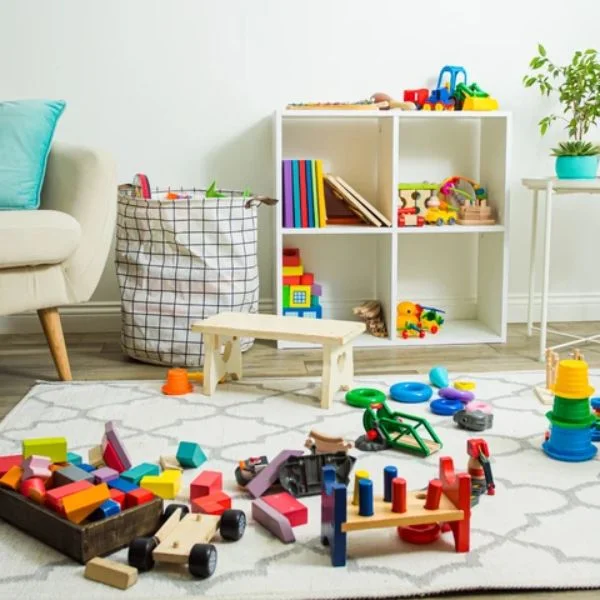
Donating is the simplest exit, but call before you load the car. Not every drop-off site accepts used toys, and the ones that do often have rules about what's missing, what runs on batteries and whether stuffed items are allowed at all. A quick look at the organization's website or a two-minute call saves you from hauling a trunk full of bags back home. Cost is just the gas to get there.
Before anything moves to another family, check it against the recall list at cpsc.gov/recalls. This is the one step that isn't optional. Recalled toys shouldn't go to another household, period.
Reselling takes more effort, and that's the honest trade. You photograph, list, answer messages and meet a stranger in a parking lot. For a well-kept wooden train set or a big-ticket gift that barely got opened, the effort can pay off. For a grocery bag of mixed plastic, it usually isn't worth it. Selling a few items at a time, rather than unloading everything at once, keeps it from becoming a second job. Most local platforms let you list for free, though shipping-based sites take a cut. Shoot photos in daylight with the pieces counted, and run the recall check first.
Hand-me-downs are often the easiest option. A text thread can do what a thrift store can't. Send one photo to a sister or the parent from soccer whose kid is two years younger, and ask if anyone wants the shape sorter before it heads to the donation pile. Most of the time someone says yes within the hour. It costs nothing but a phone and a car trunk. Hand-me-downs skip the retail safety net, though, so check the recall list before anything changes hands.
A toy swap is another route. If two or three other families are facing the same post-Christmas pile, put an afternoon on the calendar. Everyone brings outgrown toys in good condition, everything gets spread across a dining room table, and everyone leaves with something new to their house. The only cost is whatever snacks you'd set out anyway. Two ground rules keep it from backfiring: bring only clean, complete toys, and agree ahead of time that leftovers go straight to a donation drop-off that same day instead of riding home in someone's back seat.
Big plastic toys need their own plan. Nobody wants to wrestle a play kitchen or a ride-on car into a sedan, which is exactly why those pieces sit in the corner for another year. List them for free on a local Buy Nothing group or Facebook Marketplace with "curbside pickup" in the description. Someone will often come get them out of your garage within a day or two. Hose them off and wipe them down first. A clean toy gets claimed fast, while a grimy one can sit in a listing for a week. Big items are the ones that give you back actual floor space.
Books and puzzles usually belong in a separate pile. A Little Free Library down the street, a library's used book sale bin, a classroom teacher or a waiting room that's already said yes will all take board books and early readers. Puzzles come with one condition. Dump each one on the table and count the pieces against the number printed on the box. Complete puzzles pass along fine. Incomplete ones go in the trash rather than becoming someone else's frustration.
Stuffed animals deserve their own exit. They multiply faster than anything else in the room, and they're the hardest thing to rehome, since plenty of thrift shops limit or refuse used plush. Call before you show up with a bag of them. Have each child pick a set number to keep, somewhere between five and ten depending on the bed and the shelf. Wash the rest on warm, let them dry completely, then work through the list, starting with a friend who has a younger child and moving on to any preschool, church nursery or daycare that has already said yes. Anything stained or still unclaimed after those calls can go in the trash without guilt.
Return the Duplicate Gifts While You Still Can
Two of the same board game showed up. A set your mother-in-law bought that your kids already own. Holiday return windows at stores like Target, Walmart and Amazon often stretch into late January, but the dates vary by retailer and by what was bought. Check the receipt or the order page this week rather than in February. No gift receipt doesn't always mean no return. Many stores will offer an exchange or store credit for unopened items, which you can put toward clothes in the next size up or something the kids will actually use. One duplicate returned is one fewer thing to store and trip over.
Stage the Bags So They Actually Leave
Bags that sit in the hallway for three weeks tend to get unpacked. A kid wanders past, pulls something out, and the pile you spent an entire Saturday on quietly reassembles itself in the playroom. Pick one spot the kids don't pass, such as a garage corner or the trunk of your car, and move every sorted bag there the same day you fill it. Then set a calendar reminder with a real date for drop-off. Vague intentions lose to a curious toddler every time.
Keep a few heavy contractor bags on hand for this stage. They run about $12 to $15 for a box at Walmart and hold up better than kitchen bags when the contents are hard plastic toys.
Store Only What Fits, Then Rotate It
Sort by category rather than by brand. Blocks go with blocks, cars with cars, dolls and their clothes together, art supplies in one spot. Brand-based sorting falls apart the moment a set loses half its pieces. Category bins keep working whether the pile is big this week or half that size next month. Count your categories first, then use that many bins and not one more. That restraint is the part most families get backward. Clear totes at Target or Walmart typically run about $5 to $10 depending on size, so a full set might cost $0 to about $25, and many households already have enough containers in the basement to cover it. Prices vary by region, so check yours.
Then let the bin set the limit. When the blocks bin won't close, that's your signal. What fits stays, and what doesn't gets sorted down to the pieces actually being played with. This is what keeps a January cleanout from undoing itself by March. Birthdays come, party favors ride home in pockets, and without a hard edge on each category the pile rebuilds itself. Say the rule out loud to the kids so it becomes the bin's rule instead of yours. "The cars live here, so we keep what fits" lands much more softly than a surprise purge six weeks later.
Toy rotation takes the idea one step further. Keep about half the toys out, store the other half in a closet or under a bed, and swap them every few weeks. It costs nothing because it runs on the category bins you just set up plus one closet shelf or a stretch of under-bed space. Swap whole categories rather than picking through individual toys, and the job takes about ten minutes. A bin that comes back out after three weeks often gets played with like it's brand new. I started rotating out of pure desperation after a Christmas that left us with no floor, and it turned out to be the most useful change I made.
If your holiday haul is still sitting in shopping bags, try a holding bin for the new gifts. Pick one box you already own, stash it on a closet shelf, and let new gifts come out a few at a time over several weeks instead of all at once. I wish I'd done this the year every gift came out of its box before lunch and nothing held anyone's attention for more than four minutes. A toy that appears in mid-January gets real attention, and the playroom never has to absorb the full haul in a single day.
Your Playroom Can Breathe Again
That mountain of new toys doesn't have to win. Letting the holidays happen wasn't a mistake, and sorting before storing is what makes the difference this time. Start with the packaging and the broken pieces, let the calendar handle the close calls, then send the extras out the door through a donation, a text thread, a free listing or a return.
Pick one pile this afternoon. You don't have to fix the whole room today. By the time the decorations come down, the playroom will already feel different, and the next time someone hands your kids a box with a bow on it, you'll know exactly where it goes.